Why showers leak
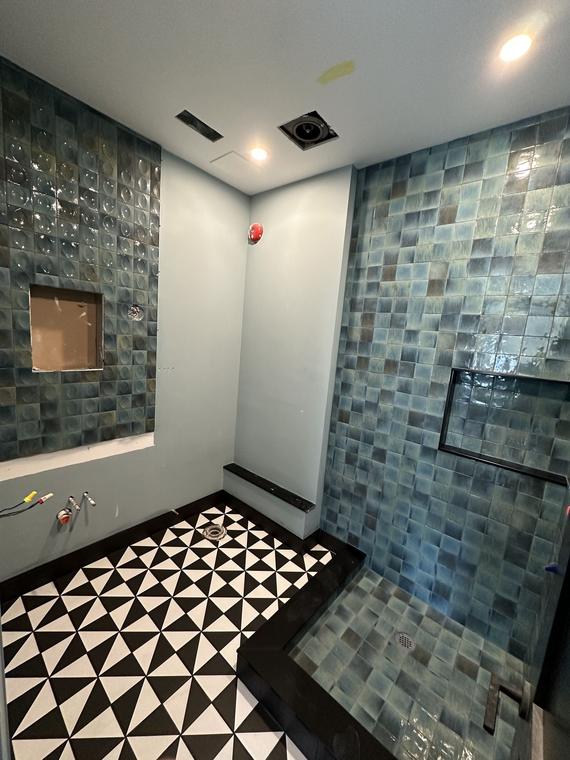
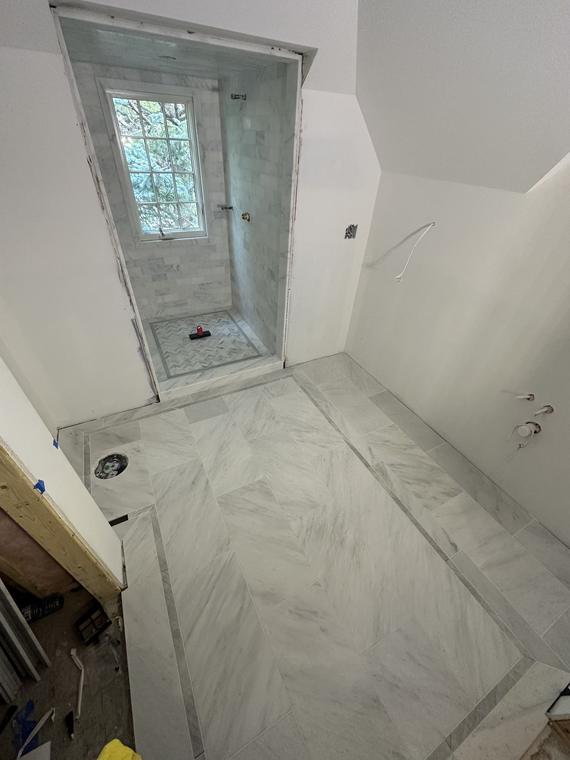
Grout and tile are not waterproof. In a shower without a proper membrane, water soaks through the grout into the board and framing behind it. Over months and years that causes loose tiles, black grout, mould behind the wall and damage to the ceiling below. Most of the time, the problem isn't the tile. It's what was or wasn't done underneath.
How we build it: the Schluter KERDI system
- Substrate. Walls and floor are checked for flat, plumb and solid. Uneven studs are corrected and the floor is levelled where needed.
- Suitable board. Wet-area backer board or foam board instead of regular drywall in the shower.
- Sloped floor. The shower floor is sloped consistently toward the drain, with a mortar bed or a pre-sloped tray.
- Drain. A KERDI-DRAIN or KERDI-LINE linear drain, bonded into the membrane so water at the surface goes into the drain.
- Membrane. KERDI membrane over walls and floor, with overlapping seams, pre-formed inside and outside corners, and seals around valves and shower heads.
- Niches and benches. Waterproofed as part of the same system, with the niche sill sloped so water runs out, not in.
- Check before tile. Every seam and corner is inspected before tiling begins.
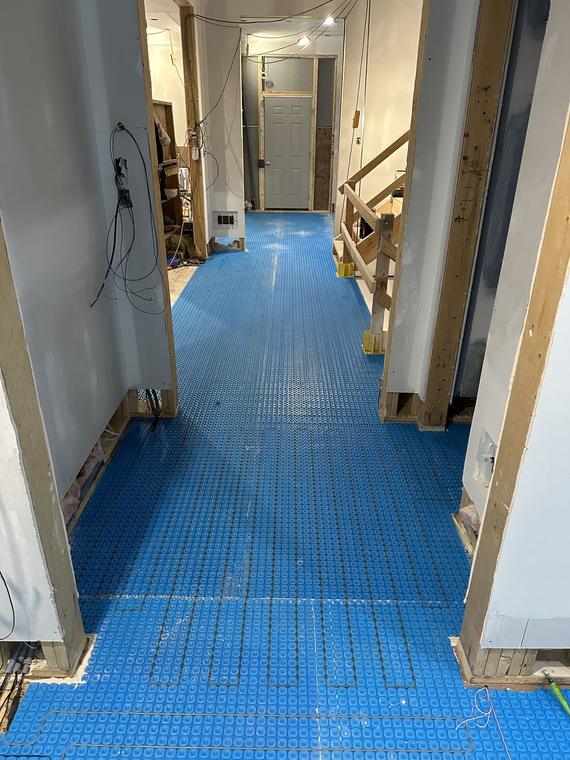
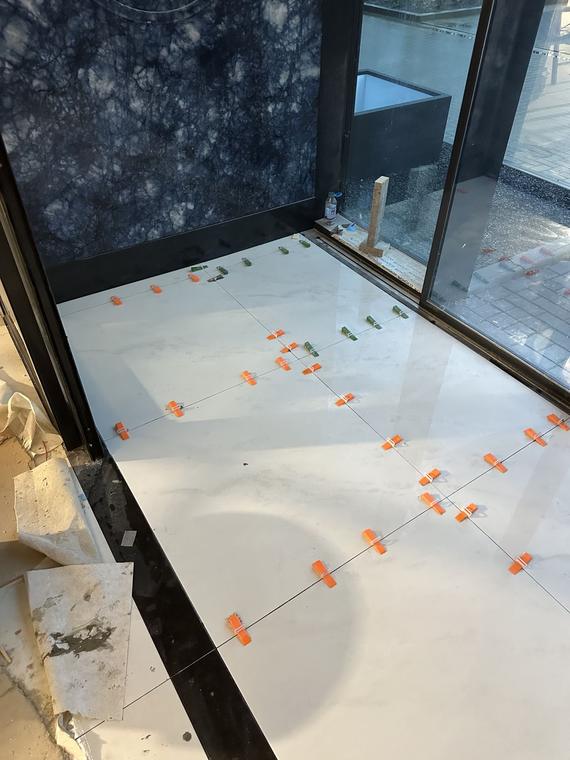
Floors outside the shower
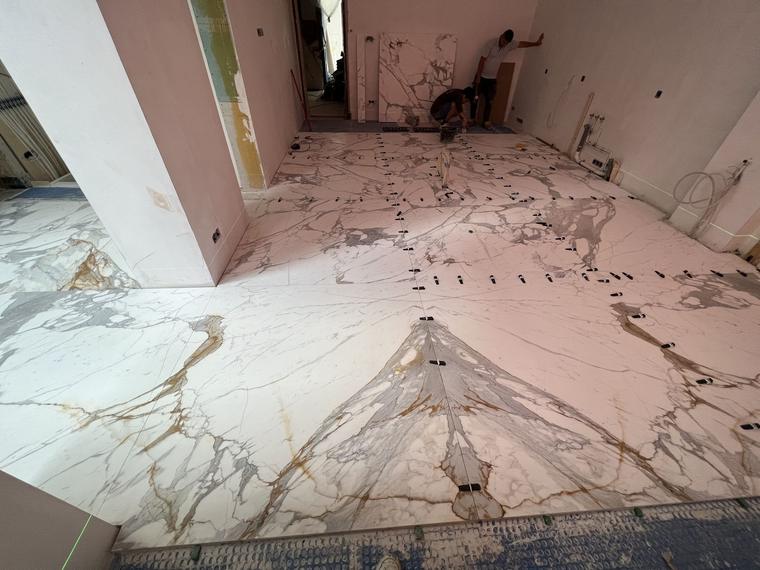
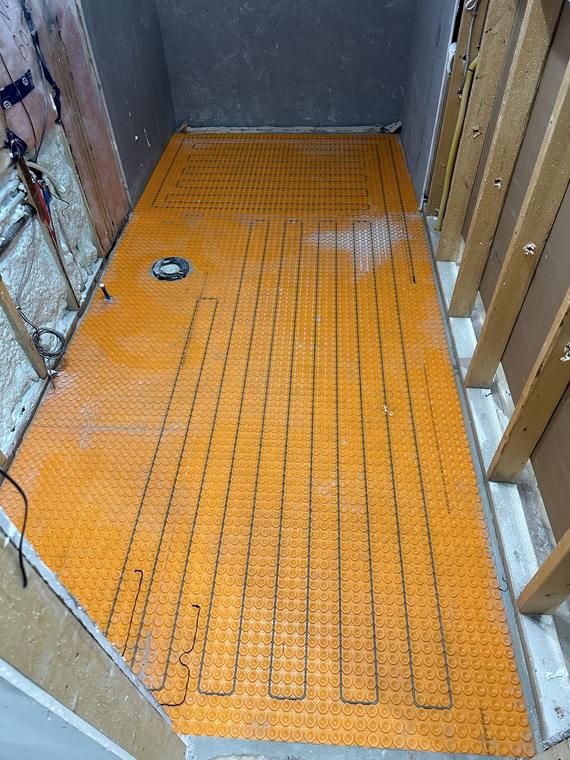
On bathroom and kitchen floors we often use an uncoupling membrane like Schluter DITRA. It lets the tile and the subfloor move independently, which helps prevent cracked tile and grout, especially on wood subfloors and with large-format tile.
Why we name the system
Many installers just say "waterproofed." We tell you exactly what goes into your walls, because you'll never see it again once the tile is on. Using one complete system, installed to the manufacturer's instructions, is what keeps a shower dry for the long term.