- Decide the scope first
- The order of work
- Set a realistic budget
- Measure and order tile
- Choose the right tile
- Waterproofing
- Shower floors and drains
- Renovating a condo bathroom
- Permits and work hours
- How long it takes
- Common mistakes
1. Decide the scope first
Most budget surprises come from a scope that changes halfway through. Before you ask for quotes, decide:
- Are you keeping the tub, or converting it to a walk-in shower?
- Is anything moving: the toilet, the drain, the shower valve? Moving plumbing means a licensed plumber, and possibly a permit.
- Are you tiling the floor only, the shower, or the whole room?
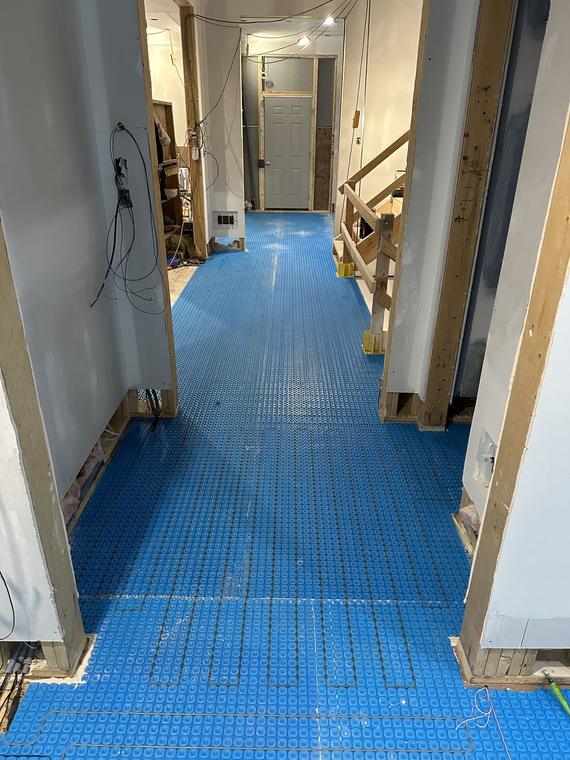
- Do you want extras like a heated floor, niches, a bench or a linear drain?
Write it down as a short list and send the same list to everyone who quotes. That's the only way to compare prices fairly.
2. The order of work
- Choose and order the tile before demolition, so a delivery delay doesn't leave you without a bathroom.
- Demolition of the old tile, board and fixtures.
- Plumbing and electrical rough-in by licensed trades.
- Repairs to the subfloor or framing, and blocking in the walls for grab bars or glass.
- Board, levelling and waterproofing.
- Tile, then grout and flexible sealant in the corners.
- Fixtures: vanity, toilet, taps and shower trim.
- Shower glass, measured once the tile is finished.
Glass is the step people forget. It's measured on the finished tile and made to order, so plan to use a shower curtain for a while.
3. Set a realistic budget
A bathroom budget has three parts: labour (tile, plumbing, electrical), materials (tile, membrane, mortar, grout and trims) and fixtures (vanity, toilet, taps and glass).
For the tile work, our price guide has real ranges: a tiled shower with KERDI waterproofing is typically $3,800–$6,500 in labour, and tiling a full average-size bathroom $6,500–$12,000, before HST.
Older bathrooms often hide surprises behind the tile: a soft subfloor, uneven framing or a thick old mortar bed. We suggest keeping 10–15% of your budget aside for them.
4. Measure and order tile
Use our tile calculator to work out how many tiles and boxes you need. Then:
- Buy all the tile at once, plus 10–15% extra. Tile from a later batch may not match in shade or size.
- When it arrives, check that the batch numbers on the boxes match, before anything is installed.
- Ask the store about lead times. Large-format and special-order tile can take weeks.
- Keep a few spare tiles after the job, for repairs.
5. Choose the right tile
Porcelain
Dense, hard and low in water absorption. It works on floors, walls and showers, which is why it's the most common choice.
Ceramic
Softer and usually less expensive. Great for walls and backsplashes; check that it's rated for floors before using it on one.
Natural stone and marble
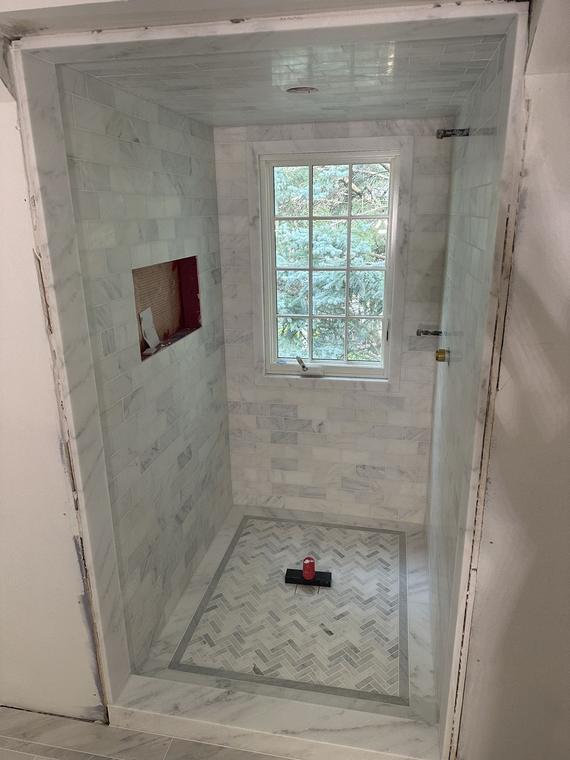
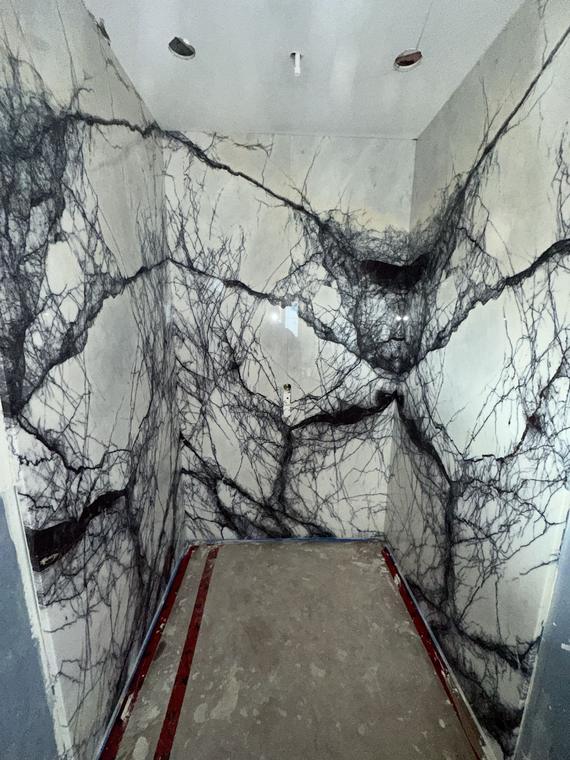
Every piece is different, which is the appeal. Stone needs sealing and gentle cleaners, and marble can etch from acidic products. See marble and natural stone installation.
Large-format porcelain
24×48 and larger means fewer grout lines and a clean, modern look. It needs a very flat surface and a levelling system, so it costs more to install. See large-format tile installation.
Slip resistance and finish
For a shower floor, choose a matte or textured finish, or smaller tiles: more grout lines give more grip. Many porcelain spec sheets list a DCOF slip-resistance value. For level indoor floors that will get wet, the ANSI A137.1 standard sets 0.42 as the minimum. Polished and glossy tiles are fine on walls but slippery on a wet floor.
Whatever you choose, check the manufacturer's spec sheet: whether a tile suits a floor, a wall or a shower depends on the product.
6. Waterproofing: the part you never see
Tile and grout are not waterproof. Water passes through grout, so a shower needs a continuous waterproofing membrane behind the tile: on the walls, floor, curb, niches and bench, sealed at every seam and corner, around the pipes, and joined to the drain.
We build every shower on the Schluter KERDI system, installed to Schluter's instructions. Whoever you hire, ask which system they use and ask to see photos of it before tiling. How we waterproof a shower.
7. Shower floors and drains
The shower floor needs a steady slope towards the drain, typically about 1/4 inch per foot. Too little slope leaves puddles; uneven slope leaves low spots that hold water.
- Centre drain: the floor slopes in from four sides, so it suits smaller tiles or tiles cut along the slope lines.
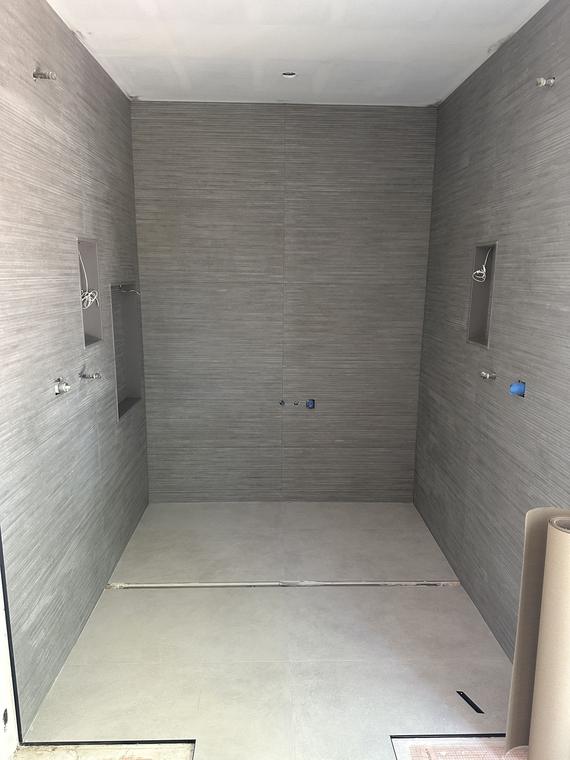
- Linear drain: the floor slopes one way, towards a long channel. That allows large tiles on the shower floor and makes a curbless shower possible.
- Curbless showers usually need the shower floor recessed, which depends on the floor structure. In condos, the concrete slab can limit what's possible.
The drain and the membrane must be designed to work together, so the waterproofing seals into the drain.
8. Renovating a condo bathroom in Toronto
Every condo building has its own rules. Before you book anyone:
- Read your building's renovation rules and ask management whether you need written approval.
- Book the service elevator and loading area for deliveries and for removing debris.
- Ask which hours and days work is allowed, and when noisy work like demolition and cutting can happen.
- Ask whether contractors need to provide proof of insurance.
- Ask about flooring rules. Some buildings require a sound-reducing underlay under hard flooring.
- Plan parking for the trades.
9. Permits and work hours
Replacing tile on its own generally doesn't need a building permit, but moving or adding plumbing, or changing walls, may. Toronto Building has a permit guide on toronto.ca, and you can call 311 to confirm what your project needs before work starts.
Construction noise in Toronto is limited by the City's noise bylaw, and condos often set stricter hours. We plan the noisy work inside those hours.
10. How long it takes
- A tile floor: usually one to three days.
- A shower: usually four to seven working days.
- A full bathroom: typically one to two weeks of tile work.
Add time for the other trades, and for curing: grout and sealant need time to cure before the shower is used. We'll tell you exactly when you can use it.
11. Common mistakes
- Choosing tile without the room in mind. A slippery tile on a shower floor, or a busy pattern in a tiny room.
- Buying too little tile. A second order may not match the first.
- Skipping waterproofing. Grout and cement board alone don't keep water out of the wall.
- Using the wrong materials. Large-format tile and stone need the right mortar and preparation.
- Not planning the drain. The type and position of the drain decide the floor slope and the tile you can use.
- Ignoring the substrate. Tile only stays flat and uncracked on a flat, solid base.
- Choosing on price alone. The cheapest quote often leaves out preparation or a real membrane.
Before you hire, go through our tile installation checklist and the questions to ask any installer.